In 2025, the Technical Development Division focused not only on advancing Škoda products, but also on enhancing its own facilities and internal processes. Standout developments included the launch of the Fabia 130, a model developed to mark the brand’s 130th anniversary in record time, the all-new Škoda Vision O concept, signalling the near future of estate cars, and an updated iteration of the Škoda Enyaq RS Race electric racing concept. The current Škoda Fabia RS Rally2 also enjoyed another highly successful season. The year also involved intensive preparation for a broad set of legislative requirements essential to maintaining stability across the Division’s development pipeline.
Modern Technologies
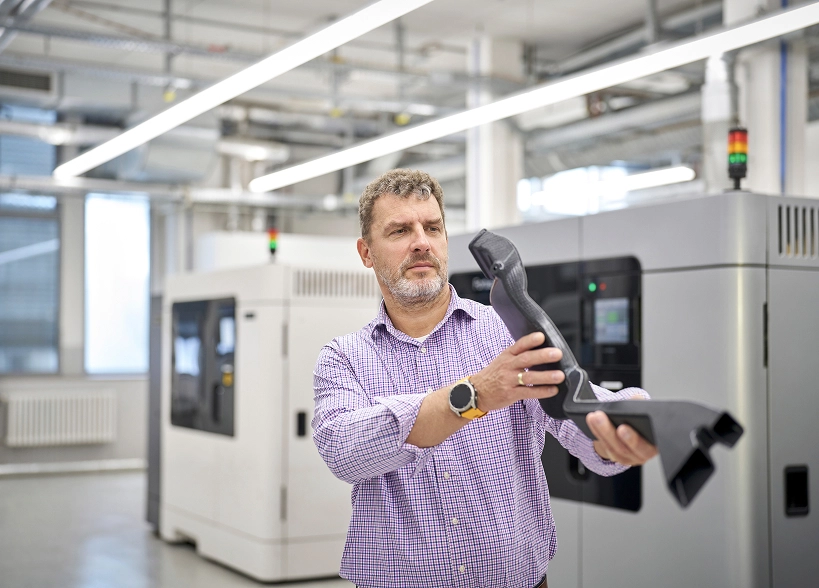
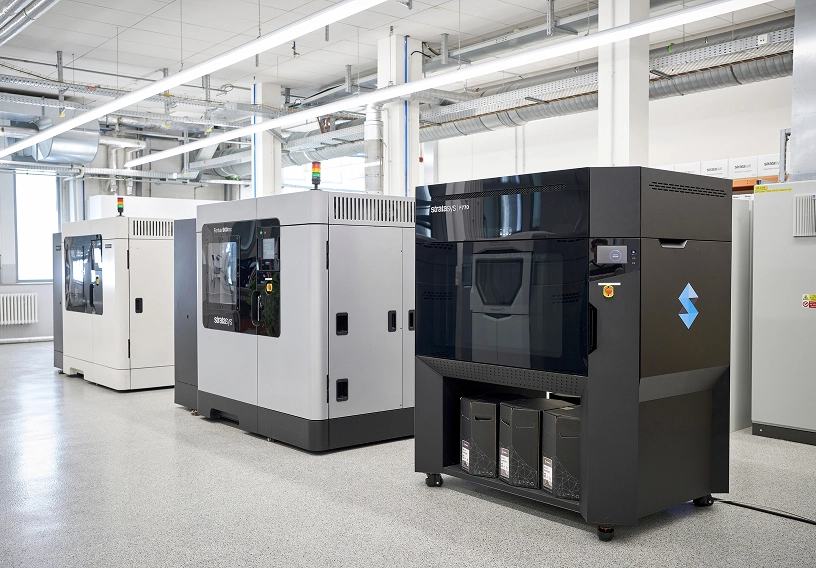
3D printing centre
Škoda Auto has been using 3D printing methods in development for more than 30 years and produces around 15,000 components a year for prototype construction and testing. Having in-house 3D printing capability enables the Company to make rapid adjustments without compromising confidentiality. Until recently, the equipment was spread across several buildings, prompting a decision to consolidate and modernise it. The result is the new 3D Printing Competence Centre, which supports development activities and is expected, in time, to be used for bespoke manufacturing as well.
Simulation Centre
In mid-2024, Škoda Auto opened a new Simulation Centre, a major advance in technological development. In 2025, trial operations were successfully completed, confirming both the high effectiveness of the facility and its innovative approach to simulations. From 2026 onwards, the Simulation Centre will be fully integrated into multi-shift operation. This will further strengthen the Company’s ability to respond to dynamic market requirements and increase its competitiveness in the automotive industry. It is one of the most advanced facilities of its kind in Europe and is unique even within the wider Volkswagen Group. The centre supports the comprehensive testing of powertrain systems and thermal management, with state-of-the-art equipment capable of precisely reproducing a broad range of conditions, including air temperature and humidity, altitude, solar load, driving stress, and vehicle speed.
Augmented virtual reality
One of the Technical Development Division’s key aims is to keep shortening and simplifying its processes so that new design and technical solutions reach the market as quickly as possible. In 2025, this included further rollout of virtual tools that enable faster and more efficient vehicle development. The principal innovation was a revised approval process for a vehicle’s final form before series production or part production begins, in which individual surfaces are assessed from visual, technical, and quality standpoints.
UX Product House
Customer focus is one of the Company’s strategic priorities. This has led to the creation of the UX Product House, a hub that brings together specialists dedicated to the in-car user experience. It unites expertise in UX design, visual design, implementation, prototype development, and research. This interdisciplinary set-up supports knowledge-sharing and introduces working practices drawn from software development. The first innovations developed within the UX Product House will appear in Škoda production vehicles in the second half of 2026.